¡Hablamos Español!
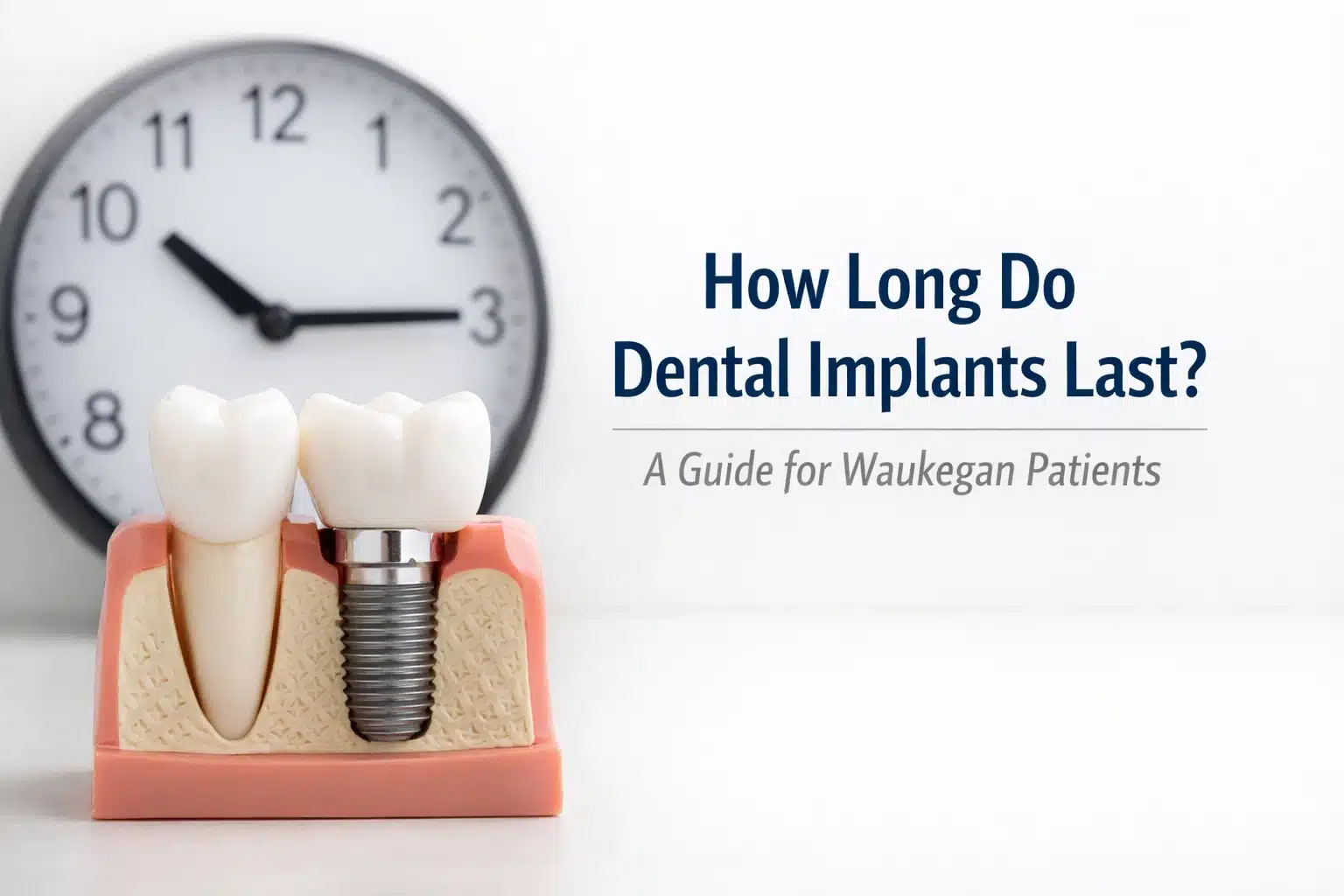
Dental implants are a great solution for missing teeth, offering a natural appearance and feeling that gives years of satisfaction. If you are considering this treatment, one of the most common questions is how long it lasts. How long should you wear your dental implants, and what determines their longevity? Read on to learn more about these factors and why you’ll want to know about them when it comes time to make a decision regarding your oral health.
Fortunately, endosseous implants can last for decades with proper care and, in some cases, a lifetime. Nonetheless, their longevity is influenced by several factors, including oral hygiene, personal habits, and the quality of implant material. In this guide, we will discuss how long dental implants typically last and the main factors that affect their longevity.
How Long Do Dental Implants Actually Last?
Dental implants are expected to provide you with a permanent, excellent solution for a lost tooth. The titanium post, which is rooted in the jawbone, can typically last for decades, or more than 25 years. But the lifespan of an implant depends not only on the health of the implant component itself but also on how healthy the crown or restoration placed on top is. With that said, most patients can expect to enjoy their implants for 15 to 25 years before needing replacement. This often varies based on several factors.
When properly maintained and evaluated every couple of years, dental implants in Waukegan are quite common to last longer than 25 years. Sometimes, they can even last a lifetime, provided the patient maintains good oral hygiene and visits their implant dentist regularly.
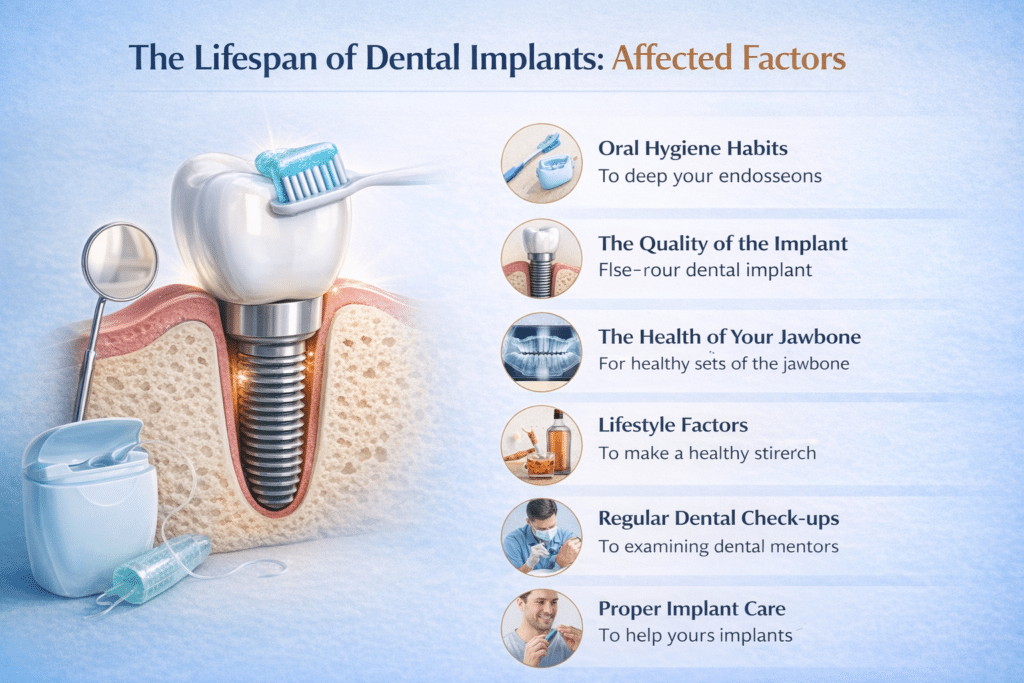
The Lifespan of Dental Implants: Affected Factors
There are a few different factors involved with how long dental implants last. Some of these you can control; others depend on your overall health and your implant dentist.
1. Oral Hygiene Habits
To keep your endosseous implants for as long as possible, practicing good oral hygiene is important. Similar to natural teeth, implants are susceptible to plaque and bacterial buildup. If plaque forms in the vicinity of the implant or restoration, infection and gum disease can develop, as well as peri-implantitis, which can jeopardize the implant. Daily brushing and flossing, along with regular dental cleanings, help prevent these problems and prolong the life of your implants.
2. The Quality of the Implant
Another aspect is the material used in dental implants. In general, fixtures are made from high-quality titanium, which is biocompatible and strong. The titanium implants fuse with the jawbone; this process, known as osseointegration, provides a strong and durable foundation.
3. The Health of Your Jawbone
Dental implants thrive on their strong foundation: your jawbone. For stability, the implant post must fuse with the jawbone. If you have low bone density due to bone loss, it will be difficult for an implant to integrate adequately. For this reason, your implant dentist may recommend bone grafting to build up the base for your implant, allowing it to create an effective, lasting grip.
4. Lifestyle Factors
Again, certain lifestyle factors can affect the longevity of endosseous implants. Smoking, for example, can slow the healing process and raise the risk of gum disease that could cause an implant to fail. Excessive alcohol can take a toll on dental health. Living a healthy life, not smoking, and drinking only in moderation can help you keep your dental fixtures intact.
5. Regular Dental Check-ups
Regular visits to your implant dentist can help you keep your implants healthy. At these appointments, your dentist will assess the condition of your implants, check for signs of infection, and monitor the health of your gums. Spotting problems early can allow you to stop them from getting worse and help your implants last longer.
6. Proper Implant Care
In addition to brushing and flossing, special care for your endosseous implants is advisable. Do not chew on anything hard, such as ice or pens, that can fracture the crown. If you grind your teeth, your implant dentist will ensure that you wear a nightguard to prevent unnecessary wear on your implants.
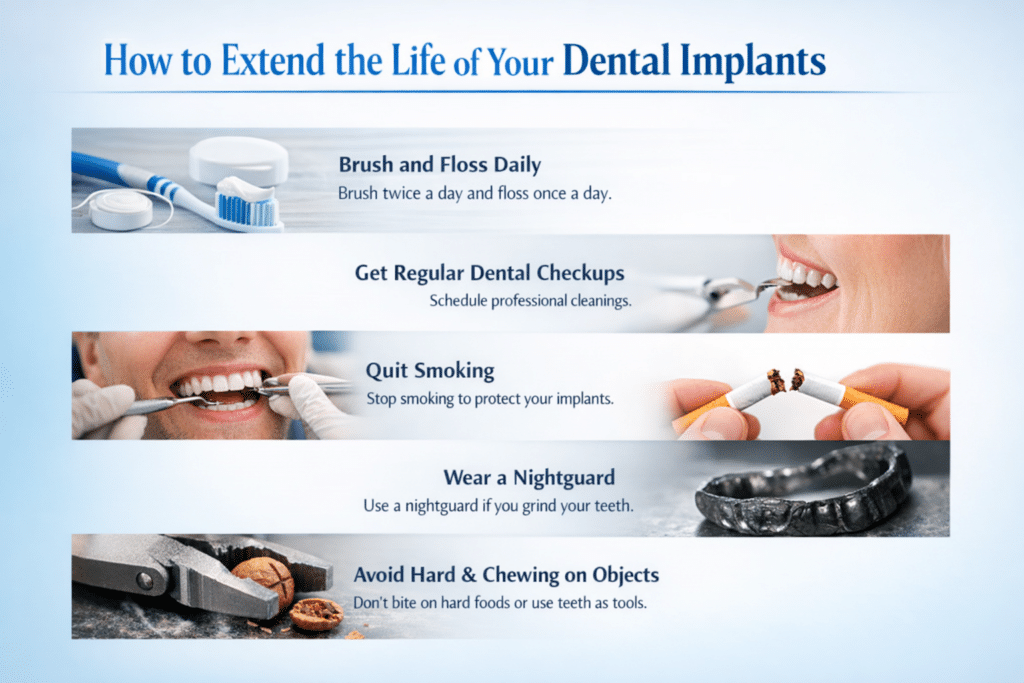
How to Extend the Life of Your Dental Implants
Following a few simple guidelines can help you to get the most out of your endosseous implants. Here are a few tips on how to make your implants last longer:
- Make sure to brush at least twice a day, and floss at least once a day, whenever possible, to get between your teeth and remove plaque and food particles.
- Book periodic cleanings with your dental care team to remove tartar from your teeth.
- Quit smoking, which can delay healing and increase the risk that your implant will fail.
- If you clench your teeth, wear a nightguard to relieve excessive strain on your implants.
- Be cautious with your implants; avoid biting down on hard items or using your teeth as tools.
With good care, your implants will resemble natural teeth and remain healthy for many years.
Protect Your Implants for the Long Term
Dental implants are a great long-term replacement for missing teeth, and proper care can ensure they last forever. With good oral care at home, routine visits to Avery Family Dentistry, and a healthy lifestyle, you can help keep your implants just as strong and functioning for years to come. If you’re in Waukegan and interested in endosseous implants, contact our team at Avery Family Dentistry to guide you through the process and ensure your endosseous implants last for years to come!
Are You Ready to Invest in a Lifetime Smile? Welcome to the Avery Family Dentistry website! If you are interested in dental implants, call us today to schedule a consultation. Our implant dentist will speak with you about possible solutions and help you find the best one. Your smile is worth it!
Questions People Ask About Dental Implants
How long do dental implants last?
Dental implants typically last 15 to 25 years, with some lasting even longer. Proper care, including good oral hygiene and regular dental visits, can help ensure they last as long as possible, sometimes even a lifetime.
Are dental implants permanent?
While the titanium post can last indefinitely, the crown or restoration on top may need to be replaced after 10-15 years. With proper care, implants can remain functional and aesthetically pleasing for many years.
Can I prevent dental implant failure?
Yes, preventing implant failure is possible by practicing good oral hygiene, attending regular dental check-ups, avoiding smoking, and maintaining a healthy lifestyle. These habits help ensure the longevity of your dental implants.
Can I eat normally with dental implants?
Yes, dental implants function like natural teeth, allowing you to enjoy a variety of foods. However, avoid biting down on very hard foods to protect the restoration from wear and tear.
What should I avoid after getting dental implants?
After dental implant surgery, avoid smoking, drinking alcohol, and eating hard, sticky foods. Following your dentist’s aftercare instructions ensures proper healing and helps your implants integrate successfully with your jawbone.
Do dental implants require special care?
Dental implants require regular brushing, flossing, and professional cleanings, just like natural teeth. Proper care and routine dental visits will help maintain their health and ensure the longevity of your implants.